


Story Highlights
- The order reclassifies approximately 8,000 GS-15 level positions into an at-will employment category
- Affected roles include policy office leaders, chiefs of staff, and senior program managers
- The Office of Personnel Management had originally estimated up to 50,000 positions could eventually be affected
What Happened
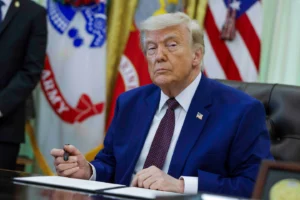
President Donald Trump signed an executive order earlier this month formally designating roughly 8,000 senior federal employees as at-will workers, stripping them of job protections that have applied to most career civil servants for more than a century. The order operationalizes the Schedule Policy/Career classification, a rule the administration finalized in February that creates a new category of federal employee who can be removed without the formal appeals process traditionally available to career civil servants.
Nearly all of the affected positions sit at the GS-15 level, the highest rung of the standard civil service pay scale, encompassing roles such as policy office directors, chiefs of staff, regional office heads, senior program managers, and officials overseeing federal spending and grants. The administration describes these roles as carrying significant influence over policy implementation, justifying closer presidential control. The number of affected positions, 8,000, is notably smaller than the 50,000 the Office of Personnel Management originally estimated could ultimately be reclassified, though the administration has not ruled out expanding the pool later.
Office of Personnel Management Director Scott Kupor defended the move as a matter of democratic accountability, arguing that because the president is the only official in the executive branch directly elected by the American people, those carrying out his policy agenda should be answerable to him in the same way employees in private companies answer to a chief executive. Kupor emphasized that no loyalty tests will be applied and that affected employees retain whistleblower protections and cannot legally be fired based on political affiliation, though enforcement of that restriction would fall to individual agencies.
Critics, including the advocacy group Democracy Forward, which is suing to block the rule, argue the change threatens the nonpartisan civil service system that Congress built starting in the late 19th century specifically to prevent corruption and political score-settling within government agencies. That system traces its origins to the assassination of President James Garfield in 1881 by a disgruntled job seeker, an event that prompted lawmakers to move the federal workforce away from a patronage-based spoils system.
Why It Matters
The shift to at-will status for thousands of senior civil servants represents one of the most significant structural changes to the federal workforce in decades. Civil service protections were specifically designed to allow government employees to provide candid, expert analysis to policymakers without fear of retaliation, including analysis that might be politically inconvenient to a sitting president. Removing those protections, even for a relatively small subset of senior positions, changes the incentive structure for how those employees interact with political leadership.
Academic researchers studying public administration have warned that increased politicization tends to correlate with declining institutional performance over time, as experienced personnel depart rather than risk providing information that conflicts with a president’s preferred narrative. Examples cited by critics include the dismissal of the Defense Intelligence Agency’s director after the agency’s preliminary assessment contradicted the administration’s public characterization of strikes on Iranian nuclear facilities, and the replacement of the Bureau of Labor Statistics commissioner following a disappointing jobs report.
For policymakers and voters alike, the change raises a broader question about how much insulation from political control the federal workforce should retain. Supporters argue that an unaccountable permanent bureaucracy can thwart the agenda of a democratically elected president, while critics argue that politicizing technical and managerial roles undermines the basic reliability of government services that Americans depend on regardless of who occupies the White House.
The policy is also widely expected to reach the Supreme Court eventually, given that it rests on the administration’s broader argument that Article II of the Constitution grants the president comprehensive control over the executive branch, including positions Congress specifically designed to operate independently of direct presidential control.
Economic and Global Context
The reclassification affects a relatively narrow slice of the roughly 2 million-person federal civilian workforce, but its implications extend further given the administration’s stated intent to potentially expand the at-will category to as many as 50,000 positions. Budget and management experts note that high turnover among senior technical staff, a likely consequence of reduced job security, carries real costs in institutional knowledge and continuity, particularly in agencies responsible for complex regulatory, scientific, and economic functions.
The policy arrives amid a broader pattern of organizational change across the federal government this year, including the dismantling of civil rights enforcement tools at the Equal Employment Opportunity Commission and new non-disclosure agreement requirements for federal employees aimed at curbing internal leaks. Together, these moves reflect a comprehensive effort to reshape how the executive branch operates structurally, not merely through individual policy decisions.
Internationally, comparisons are sometimes drawn to civil service systems in other democracies, most of which maintain stronger formal separations between politically appointed leadership and career technical staff than the model the administration is now pursuing domestically.
Implications
For the roughly 8,000 employees directly affected, the practical impact will depend heavily on how individual agencies choose to exercise their new at-will authority, with ongoing litigation potentially affecting the rule’s ultimate scope and durability. Democracy Forward and other plaintiffs are pressing legal challenges that could result in injunctions blocking implementation pending further court review.
For federal agencies, the change is likely to influence hiring and retention dynamics over time, particularly for highly skilled professionals who have private-sector alternatives offering greater job security, a dynamic that experts warn could disproportionately affect the government’s ability to recruit specialized technical talent.
For future administrations of either party, the precedent set by Schedule Policy/Career, if it survives legal challenges, would remain available as a tool for exerting more direct control over senior civil servants, meaning the structural change underway now could persist well beyond the current administration regardless of future election outcomes.
Sources
