


Story Highlights
- White House physician Capt. Sean Barbabella’s memo stated Trump scored a perfect 30 out of 30 on a cognitive assessment and declared him “fully fit” to carry out all duties as commander-in-chief
- The report noted Trump’s triglycerides rose from 56 to 104 and his resting heart rate increased from 62 to 73 beats per minute; independent physicians raised questions about recurrent hand bruising and leg swelling attributed to chronic venous insufficiency
- The White House broke with its own prior practice by waiting days after the May 26 physical before releasing any results, a delay that multiple outlets reported was unprecedented in the current administration
What Happened
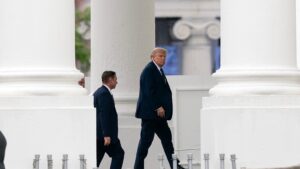
President Donald Trump visited Walter Reed National Military Medical Center on May 26 for a physical examination described by the White House as a routine annual medical and dental assessment. Following the three-hour visit, Trump took to social media to declare that “everything checked out PERFECTLY” — but the White House did not release official results alongside that post, and days passed without the standard medical readout that had accompanied prior Trump physicals.
The delay became a news story in its own right. CNN reported on Thursday, May 29, that the White House had broken from its own past practice by withholding the results, noting that the administration had previously released medical summaries quickly following Trump examinations. The White House had only shared a brief memo from White House physician Capt. Sean Barbabella stating the president was “fully fit,” without disclosing the underlying test data. Amid mounting pressure, the full three-page report was released late Friday night.
According to the report, Trump scored a perfect 30 out of 30 on a cognitive assessment — a result consistent with previous reports. His cholesterol numbers were described as within healthy ranges. However, his resting heart rate increased from 62 beats per minute to 73, and his triglycerides — a type of fat in the bloodstream — rose from 56 to 104, both moving in concerning directions according to independent medical analysis.
Independent physicians not affiliated with the White House raised additional concerns that the report did not directly address. Specifically, doctors cited recurrent bruising on Trump’s hands, visible in public appearances and widely photographed, as well as persistent swelling in his legs. The White House attributed the leg swelling to chronic venous insufficiency. Dr. Lee, a physician quoted by NPR, noted that while chronic venous insufficiency is not in itself acutely dangerous, the routine use of aspirin to address it is notable because it is no longer generally recommended unless a patient has risk factors for stroke or heart disease — conditions that could themselves explain the bruising. The report did not provide specific results for cardiac, pulmonary, or ophthalmological exams conducted at Walter Reed, stating only that they were “largely normal.”
The release came as a significant transparency debate was developing around Trump, who turns 80 in June, making him the oldest person ever to hold the American presidency. The physical on May 26 was his third visit to Walter Reed in 13 months — a frequency that independent physicians noted is unusual for routine preventive care.
Why It Matters
Presidential health transparency is not merely a matter of public curiosity — it is a governance question with constitutional dimensions. The 25th Amendment to the Constitution establishes a framework for determining whether a president is capable of discharging the duties of the office. That framework depends, in part, on an informed public and informed senior officials having accurate information about the president’s condition. A White House that filters, delays, or withholds medical information undermines the ability of that constitutional mechanism to function as designed.
The precedent of transparency matters. Since the era of modern presidential medicine, administrations have routinely released detailed summaries of presidential physicals to the public. That practice is not legally required, but it reflects the principle that a person who holds the most powerful office in the world owes the electorate basic honesty about their physical and cognitive capacity to govern. The Trump administration’s decision to break that practice — even temporarily — raises legitimate questions about what motivated the delay.
For ordinary Americans, the stakes of presidential fitness are concrete. The decisions made by the commander-in-chief over the past several months — including the prosecution of the Iran campaign, major diplomatic engagements, and domestic policy choices — directly affect millions of lives. The public’s ability to assess whether those decisions are being made by someone in full possession of their faculties is a foundational element of democratic accountability.
Bioethicist Sara Rosenthal of the University of Kentucky, who studies presidential health disclosure, noted that because presidents themselves control what is released, the public can expect transparency primarily when results are entirely favorable. That structural asymmetry means that any delay or omission generates reasonable suspicion — whether or not it is warranted — and erodes confidence in the information that is ultimately released.
Economic and Global Context
Presidential health has global market implications. Uncertainty about the capacity of the U.S. commander-in-chief creates volatility in currency markets, defense contractor stocks, and geopolitical risk assessments. At a moment when Trump is personally directing highly sensitive Iran ceasefire negotiations from the Situation Room, investor and allied government confidence in his decision-making capacity matters in concrete financial terms.
The frequency of Trump’s recent Walter Reed visits — three in 13 months — has been noted by foreign intelligence services and allied governments. In diplomatic settings, perceptions of presidential health can affect how counterparts approach negotiations, what concessions they are willing to hold out for, and how seriously they take stated American commitments. A president perceived as physically or cognitively diminished operates from a weaker negotiating position.
Domestically, the health debate intersects with the midterm political landscape. Polling has shown that presidential fitness is a factor in voter decision-making, and Republican incumbents in competitive races are privately attentive to whether health questions become a sustained media focus in the six months before November.
Implications
For the White House, the late-night document dump — a classic tactic for minimizing coverage — is unlikely to end the scrutiny. Independent physicians, congressional Democrats, and investigative journalists will continue examining the report’s omissions and the visible physical symptoms that were not fully explained. The absence of specific test results for cardiac and pulmonary assessments, despite the fact that those tests were conducted, will be a recurring point of criticism.
For Congress, the health transparency question touches on the 25th Amendment framework and raises the question of whether there should be a statutory requirement for independent medical disclosure of presidential health status — a proposal some public health scholars have made for years. The precedent of two aging presidents — Biden and Trump — raising fitness questions in succession may finally give that debate political momentum.
For voters heading into the midterms, the report’s release and its reception will shape an ongoing narrative about transparency, accountability, and the willingness of the current administration to be honest with the American public on questions that go directly to the capacity of its leadership.
Sources
“White House Finally Releases Donald Trump’s Medical Report—With Major Omissions”
